
Lab Note #1: This is Your Brain on Whole System Nonviolence
How a three-leaf clover approach to nonviolence delights your nervous system.

Introducing Lab Notes: Brief, timely observations about the impact of everyday nonviolence on wellness and the brain.
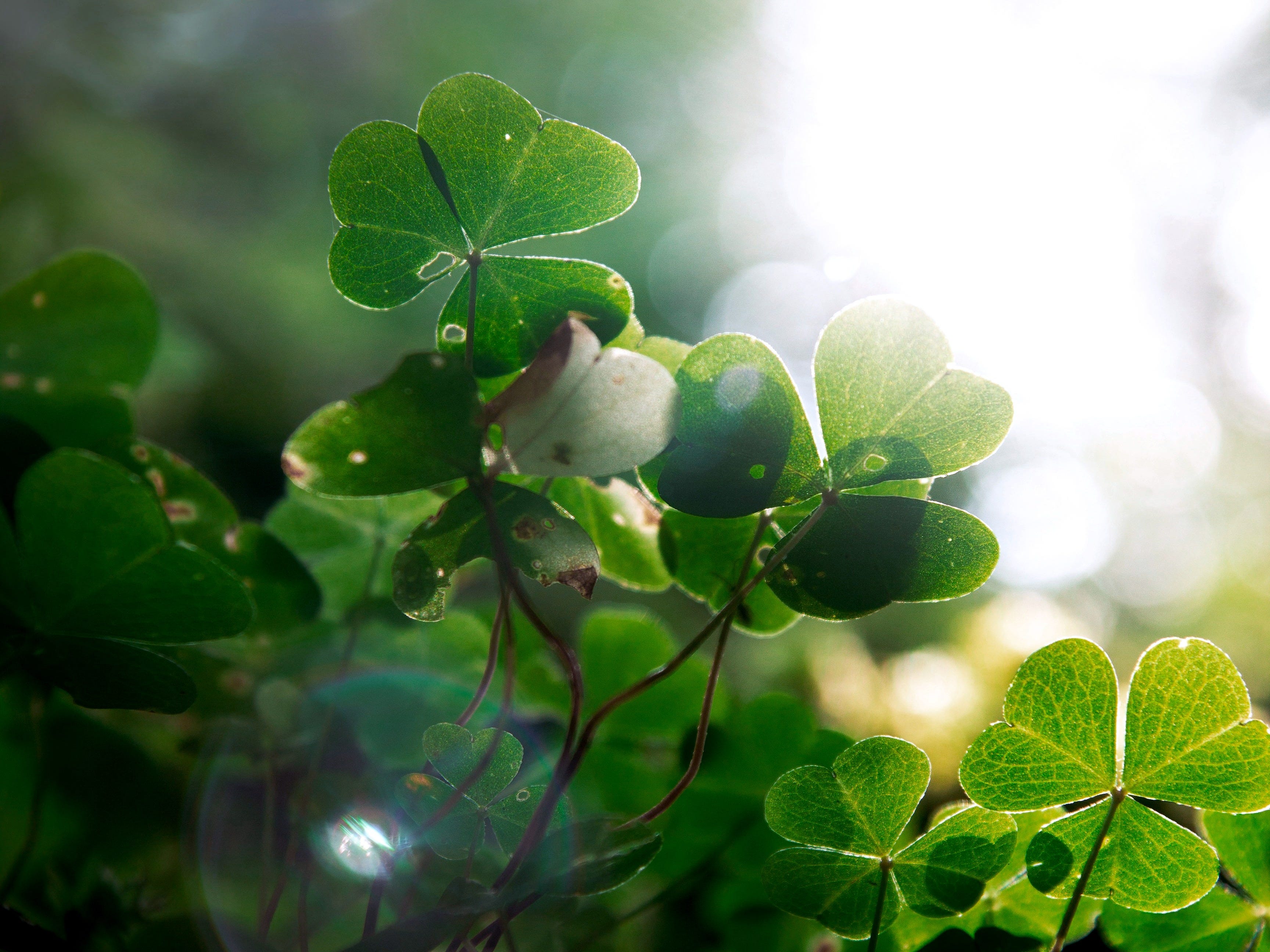
Photo by Erika SZ
When my daughter was three, we started a new tradition. Every year, on the night before St. Patrick’s Day, I would work with scissors, green construction paper, and my meager crafting skills to cut out tiny shamrocks. After my daughter fell asleep, I would sprinkle them across her bedroom. The following morning, she would wake up giggling and delighted to discover sprigs of clover blanketing her floor. Though she didn’t understand why we only did this once a year.
Later that night, I’d lay down in bed—drowsy from having lost sleep the night before—and close my eyes to see dozens of floating clover. Sometimes some floating scissors, too.
It took work to keep this tradition going, but my daughter’s giddy reaction was worth it. Maybe that’s why shamrocks come to mind when I encounter data on whole system nonviolence, and why I can’t help seeing the same “three-leaf clover” pattern as a good fit for the human brain.
What is Whole System Nonviolence?
Until recently, nonviolence research has tended to focus on isolated domains, studying nonviolence toward people, the planet, and animals as three distinct practices. And we’ve learned much from that research.
Regarding nonviolence toward people, Erica Chenoweth1 and others have taught us to pay attention to key factors in successful nonviolent revolutions. It turns out, many nonviolent movements fizzle out right before they achieve a critical mass of participants—roughly 3.5% of the representative population. Though Chenoweth cautions that the 3.5% rule is descriptive rather than predictive, it’s possible many movements could have achieved more had they continued expanding their numbers just a bit longer.
In the literature on nonviolence toward the planet, there is an observable correlation between proenvironmental behaviors and individual wellness. Taking steps to recycle and conserve energy can increase subjective feelings of wellbeing. Researchers sometimes describe this effect as the “warm glow” that results from something good for the environment, indicative of a little rush of oxytocin or other rewarding neurotransmitters.2
A whole-system approach to nonviolence fits the brain’s natural process for growth.
When it comes to nonviolence toward animals, a similar pattern can be found. One study of young people who began abstaining from the use of animal products reported decreased anxiety and a reduction in the cognitive distress associated with conflicting values. Participants who were practicing plant-based eating reported increased emotional regulation, improved mental clarity, and a greater sense of meaning.3
It turns out that these practices may not be so siloed after all. In fact, practicing nonviolence in any domain of life may generate positive benefits. And the findings of my latest co-authored study, appearing soon in the journal Counseling & Values, suggest that a whole-system approach to nonviolence may best fit the brain’s natural process for learning and growth.
Most of the folks in my study who practiced nonviolence in one domain eventually expanded their practice to include all three domains—planet, animals, and people. Along the way, they reported increased wellness through nervous system regulation, relief from distressing emotions, and increased feelings of personal integrity.
A three-leaf clover approach to nonviolence grows beyond “what I do in certain circumstances” to become “who I am regardless of the circumstance.”
A three-leaf clover approach to nonviolence appears to delight the nervous system and nourish the brain. We aren’t certain of the reasons yet, but my theory is that a comprehensive approach to nonviolence reduces decision fatigue and enhances our sense of identity. Nonviolence then grows beyond “what I do in certain circumstances” to define “who I am regardless of the circumstance.”
Those Water Lilies We Don’t Expect
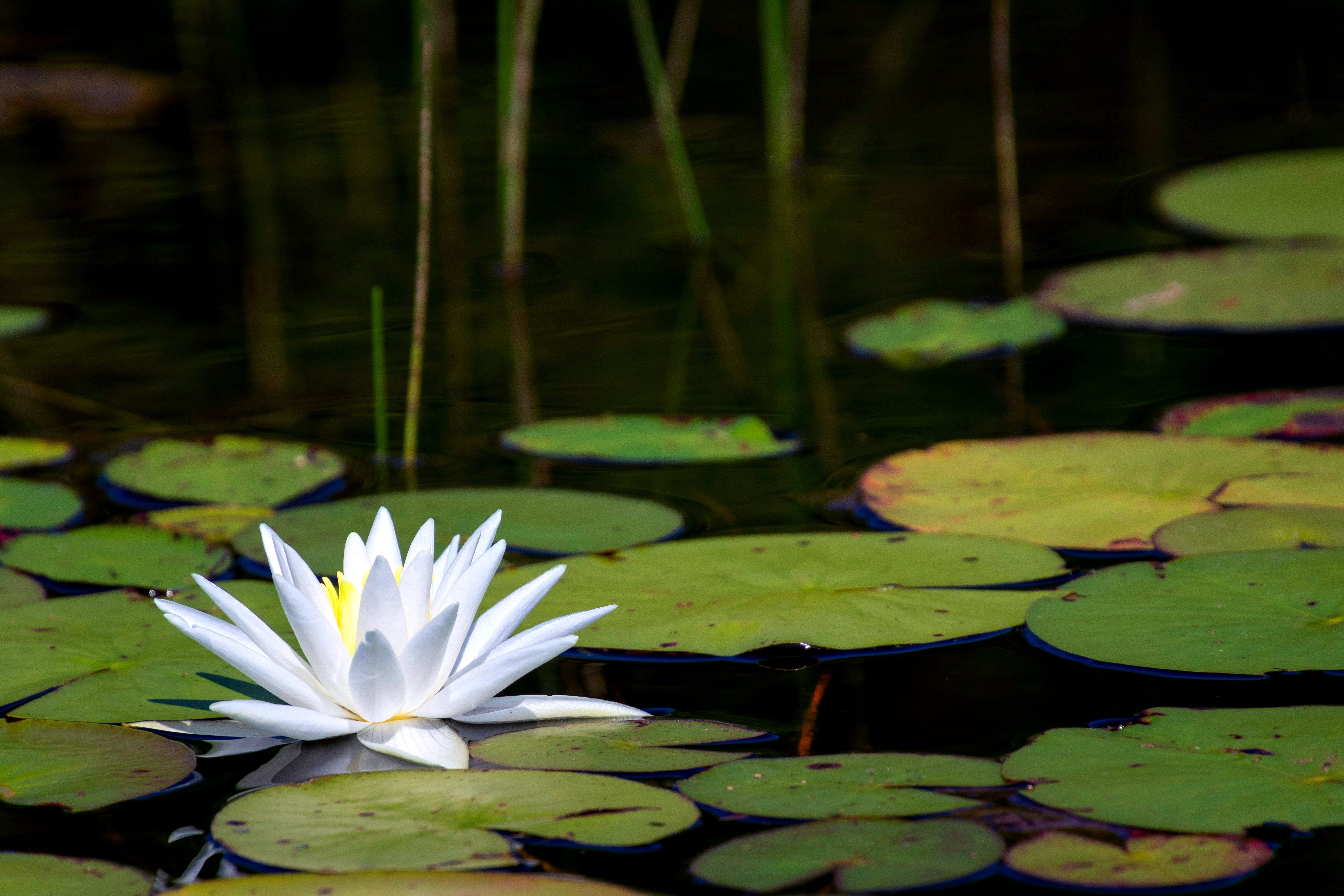
Photo by Dan Hamill
An old riddle encourages us not to underestimate exponential change:
“There is a pond in France with water lilies that double in number each day. If the pond is full of water lilies on day 40, how full was it on day 39?”
The answer, of course, is half full. When the number of lily pads is small, even if they’re doubling in count each day, it may seem like not much is happening. However, a day arrives suddenly when the pond is completely full, though it was only half-full yesterday, and a quarter full the day before. That’s the power of fractal growth.
For integrating nonviolence into everyday life, a three-leaf approach may be ideally suited to the human brain. The practice may seem daunting at first, but it’s the product of fractal growth. Starting from somewhere—anywhere—can jumpstart the process. Even nonviolence toward oneself can be a helpful “lily pad” for eventually cultivating a nonviolent practice toward the planet, animals, and other people.
We can start today in whichever small corner of life we wish, and trust that the benefits will create ripples over time.
Let’s Connect
Lab Notes is a feature brought to you by The Nonviolence Lab. Subscribe for posts and articles on practical ways to sprinkle nonviolence into everyday life—grounded in brain science and real-world stories.
If this way of thinking resonates with you, leave a comment. I’d love to hear from you.
Listening with you,

The Nonviolence Lab
Exploring the art and science of everyday nonviolence.
Chenoweth, Civil Resistance: What Everyone Needs to Know, 114–9
Capstick, et al., “The connection between subjective wellbeing and pro-environmental behaviour: Individual and cross-national characteristics in a seven-country study,” 63–73
Aguilera, et al., “Towards veganism: An affect theory approach to vegan trajectories through life stories,” 1–29
I really resonate with this approach - as a vegan, empath, psychologist, and nature lover who sees the world (and our personal well-being) holistically. Thank you!